The word "cluster" gets used a lot in UK innovation policy. The Levelling Up agenda leaned on it. LIPF is built around it. The Ofgem Strategic Innovation Fund is explicitly trying to create communities of practice within challenge areas. Academic literature on regional economic development has centred it for decades.
But there's a gap between the concept and the practice. A cluster isn't just a collection of organisations that happen to be working on similar things in the same geography. A functioning cluster is a community with shared identity, structured communication, curated membership, and mechanisms for turning proximity into genuine collaboration. Building and sustaining that takes infrastructure.
That's what SimplyDo's groups capability is designed to provide.
What a Group Is
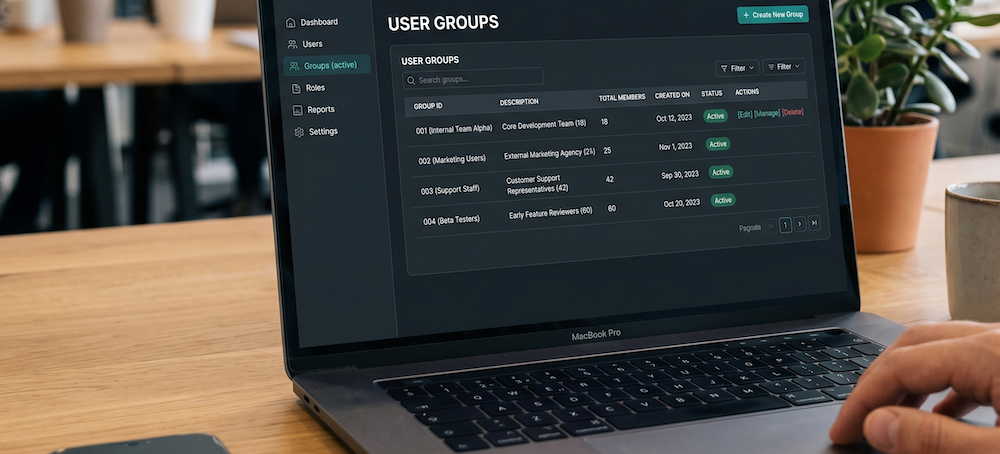
At its core, a SimplyDo group is a configurable space that brings together people, content, and opportunities under a shared identity. Groups can house members, run innovation challenges and open calls, host structured discussions, publish rich content, and communicate with their community, all within a branded environment that reflects the cluster's own identity, not just the platform's.
The flexibility here is deliberate. Innovation clusters are not all the same. A government-backed regional cluster connecting public bodies with SMEs looks different from an academic network facilitating research collaboration, which looks different again from an industry consortium managing a shared supply chain programme. The groups capability is designed to accommodate all of these setups without requiring each to be built from scratch.
Membership and Access
Member lists in SimplyDo groups are fully customisable, with a complete role-based access control system that allows administrators to define different membership tiers, each with different levels of read and write access across the group's content and features.
This matters in practice. A cluster might include anchor institutions, SME members, observer organisations, and administrators, all of whom need different access to different parts of the group. A government body convening a cluster may want its private working documents visible only to delivery partners, while keeping public-facing content open to all members. The RBAC system makes this straightforward to configure and manage.
Where a cluster spans multiple organisations (as most real innovation ecosystems do) SimplyDo groups transcend individual customer tenants, enabling genuine inter-organisational collaboration without requiring every participant to be part of the same institutional account. Multiple groups also work well together, allowing for networks of interconnected clusters that reflect the layered reality of how regional innovation actually operates.
Content and Communication
A cluster without communication isn't a cluster; it's a list of contacts. SimplyDo groups include several tools for keeping communities active and informed.
Custom pages allow group administrators to create and manage rich content: text, imagery, video, files, links, and more. These can be used for programme documentation, resource libraries, news and updates, or anything else the cluster needs to publish to its members. Content management is handled directly within the platform, without requiring technical expertise or external tooling.
Discussion boards enable topical conversation within the group, with threading, replies, reactions, @-mentions, and file uploads. Posts can include polls for quick feedback or idea capture. A full moderation and approval system gives administrators oversight and control over what is published, which is particularly important for clusters with open or lightly-screened membership.
The announcement suite handles broadcast communication: automatic, scheduled, or on-demand messages to the whole group or defined subsets of members. Automatic messages can be triggered by specific actions (a welcome message when a new member joins, for instance) with personalisation placeholders to keep communications from feeling generic. The same branding that defines the group's visual identity carries through to external emails, so every communication feels like it comes from the cluster itself rather than an anonymous platform.
Running Innovation Programmes Within a Cluster
One of the most powerful aspects of SimplyDo groups is the ability to run targeted innovation programmes directly within them. Opportunities and open calls can be scoped to specific groups, enabling privately-run or more targeted challenges that are only visible and accessible to cluster members.
This creates a natural pipeline from community to programme to outcome. A cluster of energy sector SMEs can receive a challenge targeted specifically at them. A regional innovation network can run an open call for its member organisations without opening it to the general public. A mentorship programme can match participants within a defined community without the overhead of managing a separate system.
For public sector bodies using LIPF or similar funding to convene local innovation partnerships, this means the community-building and the programme management happen in the same place, with a shared record of who participated, what was submitted, and what happened as a result.
Analytics and Reporting
Understanding how a cluster is functioning (who is engaged, what content is being consumed, how discussions are developing) is important both for managing the community and for demonstrating its value to funders and stakeholders.
SimplyDo groups include built-in reporting and analytics: in-app dashboards surfacing key statistics and charts on member activity, engagement, and programme participation, alongside Power BI integration for organisations that want to pull cluster data into their wider reporting infrastructure.
For programmes funded under frameworks that require impact evidence, and most serious cluster programmes are, having this data built into the platform from the outset is considerably more practical than trying to reconstruct it later from disconnected sources.
Where We See This Going
SimplyDo groups are already being used to power government-to-SME collaboration, regional innovation networks, academic collaboration ecosystems, industry consortia, and mentorship and support communities.
The direction of travel in UK innovation policy, with LIPF explicitly positioning public bodies as conveners of local innovation partnerships, and programmes like the Ofgem SIF building structured communities of practice around challenge areas, points clearly toward clusters becoming a more central feature of how innovation funding is delivered, not a peripheral one.
The infrastructure for that needs to exist somewhere. We think it should be purpose-built for the job, rather than assembled from generic tools that were designed for something else.
If you're building or running an innovation cluster (or thinking about how to structure one) we'd welcome the conversation.